English
Español

This website uses cookies so that we can provide you with the best user experience possible. Cookie information is stored in your browser and performs functions such as recognising you when you return to our website and helping our team to understand which sections of the website you find most interesting and useful.
For decades, enterprise security relied on the assumption that the perimeter was defined by the corporate network. Internal systems were protected by controlled infrastructure, and remote access was relatively limited.
The expansion of hybrid work, enterprise mobility and cloud platforms such as Microsoft 365 has profoundly changed this model. Today, access to corporate systems occurs from virtually any location, device or network.
In this environment, identity becomes the new perimeter.
Every login to Microsoft 365 represents a potential gateway to corporate email, sensitive documents, internal applications and operational workflows.
This shift has been recognised by modern cybersecurity frameworks, including Zero Trust architectures described in the Microsoft Zero Trust Model, where continuous identity verification replaces implicit trust in networks or devices.
Yet despite this conceptual evolution, many authentication systems remain anchored in older technological assumptions.
Passwords have historically been the dominant mechanism for controlling digital access. In response to rising threats, many organisations have implemented multi-factor authentication using SMS codes, authenticator apps or push notifications.
While these mechanisms increase security, they still rely on reusable digital secrets.
Credentials can be intercepted through phishing, shared between users or manipulated through social engineering. Even MFA systems can be vulnerable to MFA fatigue attacks or sophisticated phishing campaigns.
As a result, Account Takeover (ATO) incidents continue to affect corporate environments, allowing attackers to gain legitimate access to enterprise accounts without compromising infrastructure.
In highly digitalised organisations, the underlying issue is structural: systems authenticate digital accounts but cannot verify the physical individual behind each access.
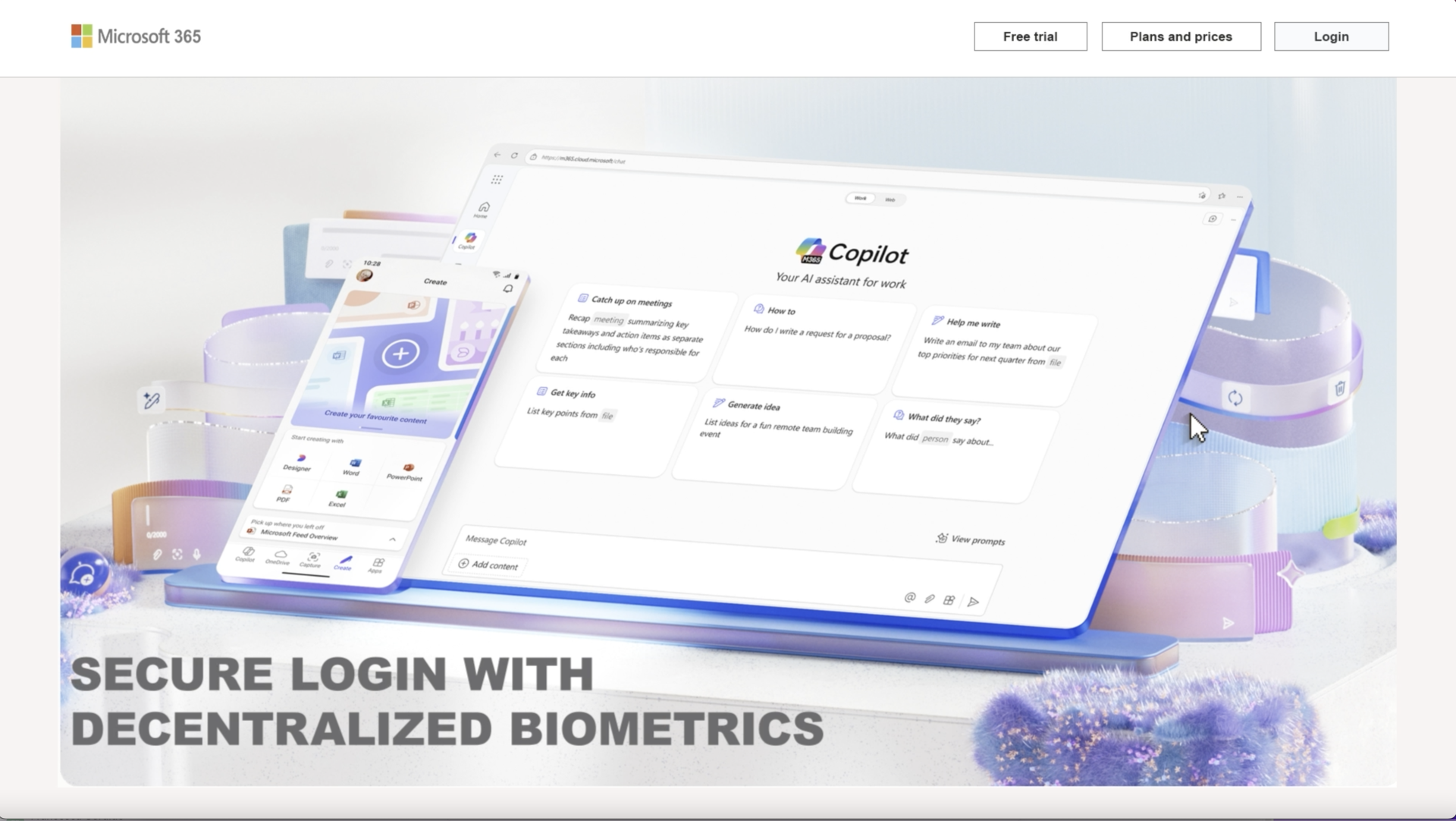
In response to these challenges, a new authentication paradigm is emerging based on the verification of human presence.
Instead of validating reusable digital secrets, this model requires active interaction from the person initiating the session. Authentication no longer depends on information that can be copied or shared, but on the verifiable participation of a real individual.
This approach aligns with identity assurance principles established in the NIST Digital Identity Guidelines, which define different assurance levels to confirm that a digital identity corresponds to a real person.
The identity infrastructure developed by B-FY reflects this paradigm.
Within this model, each Microsoft 365 login is linked to a real individual who is physically present during the authentication process. Human interaction is required through QR scanning, local biometric verification on the user’s device and a cryptographic challenge that confirms the legitimacy of the session.
This mechanism removes the operational anonymity that enables impersonation in digital environments.
The use of biometrics in authentication systems raises important questions regarding data protection and governance.
Some biometric systems rely on centralised repositories of biometric data, creating both regulatory concerns and potential high-value targets for attackers.
In the human authentication model used by B-FY, biometric verification takes place locally on the user’s device. The platform does not store biometric data or create centralised biometric databases.
This architecture aligns with privacy-by-design principles and data minimisation requirements under GDPR, as well as with European guidance on Identity and Access Management published by ENISA.
By avoiding centralised biometric storage, systemic risk associated with large-scale identity infrastructures is significantly reduced.
Digital workplace transformation is redefining corporate security priorities.
In organisations where Microsoft 365 acts as the central productivity environment, workforce authentication becomes a critical control layer for operational integrity.
Removing passwords significantly reduces incidents related to credential theft, phishing and reusable secrets.
Operationally, it also eliminates many support tickets related to password resets and credential management, one of the most persistent hidden costs of identity administration.
More fundamentally, human authentication introduces a conceptual shift: access control moves away from digital accounts and towards the continuous verification of real individuals interacting with corporate systems.
As organisations continue transitioning towards cloud-first architectures and distributed work models, security increasingly depends on reliable verification of human identities.
As long as digital access depends on reusable credentials, impersonation will remain a persistent threat.
The emergence of authentication models centred on human presence suggests a broader transformation: identity itself becomes critical infrastructure for digital trust in the modern workplace.
Want to learn more? Request a free demonstration here